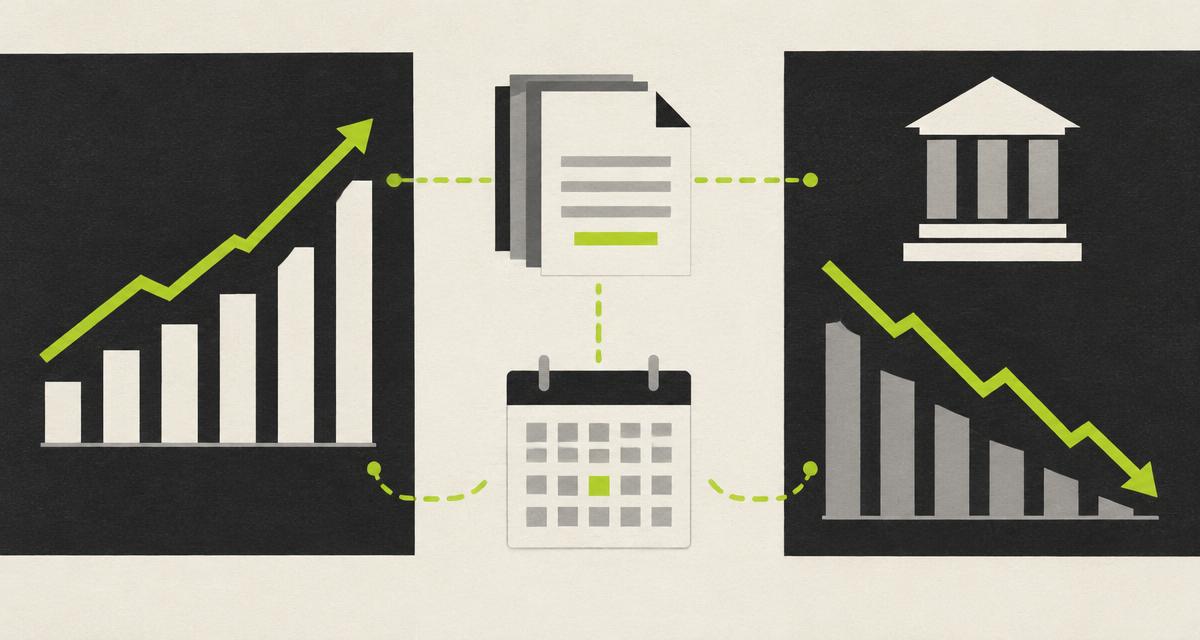
Your agency closes the month with a profit. Revenue is growing. The project pipeline looks healthy. The P&L suggests the business is moving in the right direction. But when payroll approaches, the bank balance tells a different story.
This is not necessarily an accounting mistake. A business can be profitable and still run short of cash because profit and cash flow answer two different questions.
Profit shows whether the agency earned more than it spent during a given period. Cash flow shows when money actually entered and left the bank account.
For an agency owner, understanding both is essential. Profit tells you whether the business model works. Cash flow tells you whether the business can continue operating while waiting for that profit to turn into money in the bank.
See how Sumzee brings these numbers together in a financial dashboard for agencies.
The short answer
A profitable agency can run out of cash when it records revenue before clients pay, while salaries, contractors, software and taxes still have to be paid on time. The agency may have earned the money, but it cannot use that money until the client actually transfers it.
The wider the gap between delivering the work and collecting payment, the greater the cash-flow risk.
Profit and cash flow measure different things
The basic profit calculation is straightforward: Revenue − expenses = profit. If an agency records €100,000 in revenue and €80,000 in expenses, it reports a profit of €20,000.
But that calculation does not necessarily mean the agency received €100,000 during the month. Some clients may still have unpaid invoices. Others may be on 30-, 60- or 90-day payment terms. At the same time, the agency must continue paying its team and suppliers.
A profit and loss statement asks: did the agency generate a profit during this period? A cash-flow view asks: did enough money enter the bank account to cover the payments the agency needs to make? Both numbers matter. Neither gives a complete picture on its own.
What this looks like in practice
Imagine that an agency sends €100,000 in client invoices in June. Its P&L looks healthy:
| June P&L | Amount |
|---|---|
| Revenue | €100,000 |
| Delivery costs | −€55,000 |
| Operating expenses | −€25,000 |
| Net profit | €20,000 |
The agency appears to have had a successful month. However, only €60,000 of the invoices have been paid. The remaining €40,000 is still sitting in accounts receivable. The cash position looks very different:
| June cash movement | Amount |
|---|---|
| Opening cash balance | €45,000 |
| Client payments received | +€60,000 |
| Salaries, contractors and overhead | −€80,000 |
| Tax payment from the previous quarter | −€10,000 |
| Loan repayments and other cash payments | −€8,000 |
| Closing cash balance | €7,000 |
The agency has reported a €20,000 profit but lost €38,000 in cash during the month. If a major client delays its next payment, the agency may struggle to make payroll — even though the P&L continues to show a profit.
Why profitable agencies experience cash shortages
1. Clients pay after the work is delivered
Most agencies pay their delivery costs before they receive the corresponding client payment. Employees work throughout the month. Contractors submit their invoices. Software subscriptions and operating expenses are paid on schedule. The client may not pay until 30 or 60 days after receiving the invoice.
During this period, the agency is effectively financing the client’s project with its own cash. The longer the payment terms and the larger the project, the more working capital the agency needs.
2. Revenue is recorded before cash arrives
Depending on the accounting method used, revenue can appear in the financial report when it is earned or invoiced rather than when the payment reaches the bank. This is why unpaid invoices can make the P&L look stronger than the cash position.
The revenue is real, but it is not yet available to spend. If accounts receivable continues growing faster than collections, reported revenue can increase while the bank balance falls.
3. Growth creates upfront costs
Growth is usually treated as positive news. But rapid growth can create a serious cash problem. A new client may require the agency to:
- Hire an employee.
- Reserve freelancer capacity.
- Purchase additional software.
- Increase advertising spend.
- Pay production expenses.
- Involve senior team members.
These costs may have to be paid before the first client payment arrives. The project can be profitable overall while creating an immediate cash gap. This is why signing a large contract does not automatically mean the agency can afford to hire. Before increasing fixed costs, the founder needs to understand when the related cash will actually arrive.
4. Too much money is tied up in unpaid invoices
Accounts receivable represents money clients owe the agency. It is an asset, but it cannot cover payroll until it becomes cash. A growing accounts-receivable balance is therefore an important warning sign. Founders should monitor not only the total amount owed, but also:
- Which invoices are due.
- Which invoices are overdue.
- How long each invoice has been outstanding.
- How much expected cash depends on one client.
- Whether clients are paying later over time.
A useful metric is days sales outstanding, or DSO. It estimates how long it takes the business to collect payment after making a sale.
5. Billing terms do not match the delivery schedule
Consider a three-month project worth €60,000. If the agency invoices the full amount only after completing the project, it may have to fund three months of salaries and contractor costs before receiving any cash. The total project price may be reasonable, but the payment structure creates unnecessary risk.
- Collect a deposit before work begins.
- Bill monthly.
- Invoice at agreed milestones.
- Shorten payment terms.
- Use automatic recurring payments for retainers.
Changing the payment schedule does not require changing the total price. But it can significantly improve the agency’s cash position.
6. Taxes create large and irregular payments
Some of the money in the bank account may already be committed to tax payments. VAT, sales tax, payroll taxes and corporate taxes may be paid weeks or months after the related revenue was collected. If the agency treats the entire bank balance as available operating cash, a tax deadline can create an unexpected shortage.
Tax obligations should therefore be visible in the cash forecast, even when the payment is not due this month.
7. Some cash payments do not appear as normal P&L expenses
Not every movement of cash affects profit in the same way. For example, the principal portion of a loan repayment reduces the company’s liability. It uses cash but is not treated as an ordinary operating expense on the P&L.
Owner distributions and some asset purchases can also reduce available cash without appearing in the P&L in the same way as salaries or software costs. This is another reason the income statement cannot be used as a substitute for cash-flow tracking.
8. Project costs are incomplete
Sometimes the problem is not simply payment timing. The agency may be overestimating its profit. A project can look profitable if the calculation includes freelancer invoices but ignores part of the internal delivery cost. Frequently missed costs include:
- Employee time.
- Project management.
- Calls and client communication.
- Additional revisions.
- Unplanned senior involvement.
- Non-billable work.
- Work delivered outside the original scope.
The client may generate substantial revenue while producing very little profit — or even a loss. To see this, founders need profitability data at the client and project level, not only total company revenue.
Is it a profitability problem or a cash-flow problem?
The distinction matters because the solutions are different. If the agency is consistently unprofitable, collecting invoices faster may provide temporary relief, but it will not repair the underlying business model.
- Pricing.
- Delivery costs.
- Utilization.
- Project estimation.
- Scope creep.
- Fixed overhead.
- Unprofitable services or clients.
If the agency is profitable but short of cash, the problem is more likely connected to slow client payments, poor billing schedules, growing accounts receivable, tax deadlines, hiring ahead of collections, loan repayments, owner distributions, or differences between supplier and client payment terms.
| Situation | Likely issue | What to examine first |
|---|---|---|
| Low profit and low cash | Business model or cost structure | Pricing, delivery margin and overhead |
| Healthy profit and falling cash | Timing or working capital | Receivables, billing terms and cash forecast |
| Low profit and temporarily high cash | Advance payments or borrowing | Future delivery obligations and liabilities |
| Healthy profit and healthy cash | Stronger financial position | Reserves, forecasting and controlled growth |
The numbers agency founders should monitor
You do not need a finance department or a dashboard with 50 metrics to understand the situation. Start with a small number of connected indicators.
Current cash balance
How much money is available across the company’s bank accounts today? Tax reserves and restricted funds should not be treated as freely available operating cash.
Expected cash in
Track invoices individually, including amount, due date, expected payment date, payment status and client payment history. The expected date should reflect how the client normally pays, not only what the contract says.
Expected cash out
- Payroll.
- Contractors.
- Software.
- Rent and operating costs.
- Taxes.
- Loan repayments.
- Planned hires.
- Large one-off purchases.
Rolling cash forecast
A rolling forecast shows the expected cash balance over the coming weeks. A 13-week cash-flow forecast is often detailed enough to support short-term decisions while remaining practical to update. The objective is not to predict every payment perfectly. It is to identify the period in which the business may run short of cash.
Accounts receivable
- Total unpaid invoices.
- Invoices due this week.
- Overdue invoices.
- Invoices more than 30 days overdue.
- Concentration by client.
If one customer represents a large share of expected collections, that risk should be visible.
Company profit
Track revenue, delivery costs, operating expenses and net profit using consistent categories. Changing the reporting structure every month makes comparisons difficult and can hide trends.
Profitability by client and project
Company-level profit can hide unprofitable work. For each major client or project, compare the revenue with the true cost of delivery. This shows which relationships create margin and which consume team capacity without producing an adequate return.
How to reduce the risk of a cash gap
Invoice earlier
Do not wait until the end of a long project if part of the work has already been delivered. Deposits, monthly billing and milestone invoices reduce the amount of work the agency must finance.
Make the payment process clear before work begins
- Who approves the invoice.
- Whether a purchase order is required.
- Which legal entity should be invoiced.
- Where the invoice should be sent.
- How long the client’s internal payment process takes.
A small administrative issue can delay a large payment for weeks.
Follow up before the invoice becomes overdue
Do not wait until the due date to discover that the invoice was sent to the wrong person or is missing information. Confirm that important invoices have been received, approved and scheduled for payment.
Test hiring decisions against the cash forecast
Before making a hire, add the full cost to the forecast and test several scenarios:
- What happens if the new client starts one month later?
- What if the first invoice is paid 30 days late?
- What if the project requires additional contractor support?
- What if an existing client reduces its retainer?
This helps separate “we expect enough revenue” from “we will have enough cash.”
Build a cash reserve
A reserve gives the agency time to respond when a client pays late, a project is delayed or costs rise unexpectedly. The appropriate amount depends on revenue stability, client concentration, payroll commitments, payment terms, seasonality and how quickly expenses can be reduced. The target should reflect the agency’s actual risk rather than a universal benchmark.
Review profit and cash together
A useful financial review should connect revenue, profit, cash available, unpaid invoices, upcoming payments, project margins and forecast cash balance. Looking at these numbers together allows the founder to understand not only what happened, but what decision needs to be made next.
A forecast does not need to be perfect to be useful
No cash-flow forecast will predict every late invoice or unexpected cost. That is not its purpose. If a potential cash gap becomes visible eight weeks in advance, the agency still has options. It may be able to:
- Invoice earlier.
- Follow up on receivables.
- Negotiate a payment schedule.
- Postpone a non-essential expense.
- Adjust contractor capacity.
- Reconsider the timing of a hire.
If the same problem becomes visible two days before payroll, most of those options have disappeared. Financial control is not about predicting the future with complete accuracy. It is about seeing risk early enough to act.
See profit and cash in one place
Sumzee brings revenue, costs, invoices, payments and project margins into one connected financial view. Instead of rebuilding reports across spreadsheets, bank statements and project-management tools, agency founders can answer two separate but equally important questions: Is the agency profitable? Will it have enough cash?
Use the Sumzee Cash Gap Calculator to estimate whether upcoming client payments and expenses could create a shortage. If your financial data currently lives across several tools, book a call with Sumzee to discuss the financial view your agency needs.
This article is intended for general educational purposes. Accounting and tax treatment can vary by country and business structure. Confirm specific decisions with a qualified accountant or financial adviser.